The Sarayu River: The Sacred River of Ayodhya
A complete guide to the Sarayu river at Ayodhya: its place in the Ramayana and the Vedas, the principal ghats including Ram Ki Paidi and Naya Ghat, the snan tradition, the Deepotsav festival, and visitor information.
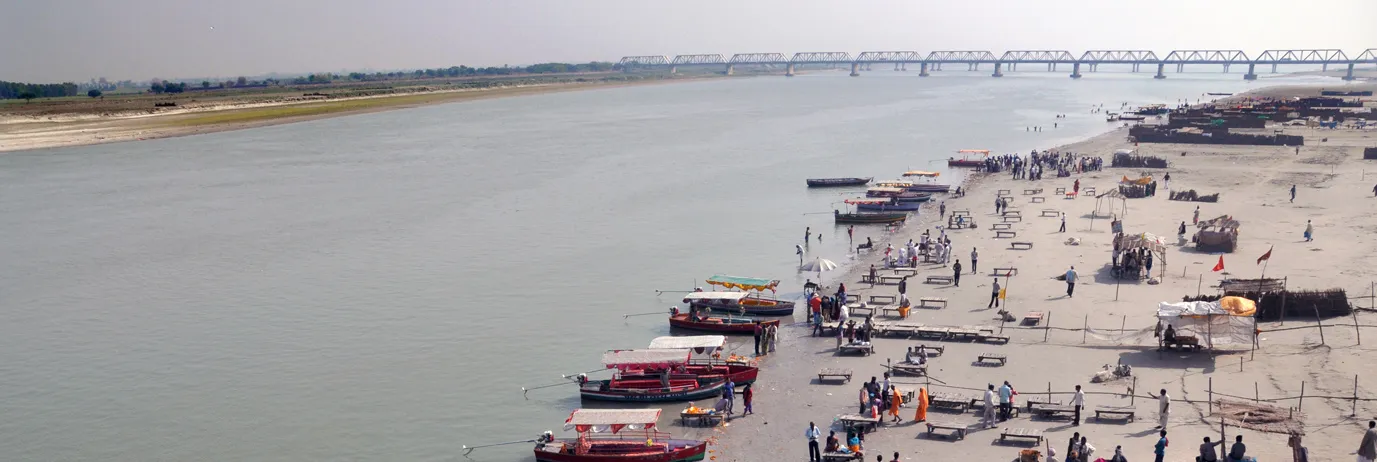
The Sarayu is the sacred river of Ayodhya: referenced in the Atharvaveda, the Valmiki Ramayana, and the Skanda Purana as the river of Lord Rama’s birth, childhood, and final departure. The Sarayu rises in the Himalayan foothills near Nepal, flows through the Bahraich and Ayodhya districts of Uttar Pradesh, and joins the Ghaghara (a major tributary of the Ganga) shortly downstream of Ayodhya.
Why the Sarayu is sacred
By tradition the river was created at the will of Lord Vishnu, dug from the Manasarovar Lake by the great king Sagara’s sons. Lord Rama played and bathed in its waters as a child, and at the end of his earthly reign he is said to have entered the Sarayu near Guptar Ghat to return to his Vaikuntha abode. To take a snan (sacred dip) in the Sarayu is, by ancient tradition, to be cleansed of past wrongs and to come closer to moksha.
The principal ghats
Ayodhya’s riverfront extends for roughly 6 km along the Sarayu’s right bank. The major ghats, from upstream to downstream:
- Ram Ki Paidi: the showpiece ghat: a series of steps and embankments rebuilt for Deepotsav. The new Ram Ki Paidi corridor lights up spectacularly during festivals.
- Naya Ghat: the principal bathing ghat for daily snan, with adjacent dharamshalas.
- Lakshman Ghat: said to be where Lakshman would meditate; small Lakshman temple adjacent.
- Brahma Kund: small kund associated with Brahma’s penance; an important parikrama node.
- Guptar Ghat: the most sacred of all: the spot where, by tradition, Lord Rama entered the Sarayu and ascended to Vaikuntha. About 6 km downstream from Ayodhya proper.
Deepotsav: the festival of lamps
Each autumn, on the eve of Kartika Amavasya, the entire 6 km riverfront is lit with lakhs of diyas for Deepotsav. The 2025 Deepotsav set two Guinness World Records: 26,17,215 oil lamps lit simultaneously, and 2,128 priests performing the Maa Sarayu Aarti together.
The daily evening Aarti
The Sarayu Aarti is performed every evening at sunset on Ram Ki Paidi by Trust-affiliated priests. Like the Ganga Aarti at Varanasi, lamps are circled in synchronised patterns to chanted mantras, accompanied by bells and conches. Free to attend; arrive 30 minutes early for a good view.
Visiting
- Best time for snan: pre-dawn (4:30–6:00 am), when the water is still and the air cool.
- Best time for the Aarti: evening at sunset (6:00–7:00 pm depending on season).
- Boat rides are available from Naya Ghat: small boats (naukas) taking devotees to Guptar Ghat downstream and back. Rates set by the Trust; avoid unauthorised operators.
- Monsoon: the river swells substantially. The Sravan Jhula Mela falls in this season.
Nearby
Sources & References
- Atharvaveda, Hymn 10.2.31
- Valmiki Ramayana, Bala Kanda
- Skanda Purana, Ayodhya Mahatmya